
What Big Basin’s Redwoods Are Teaching Us About Ecological Recovery After Wildfire
Six years ago, 97% of California’s oldest state park was engulfed in flames. Now, it is one of the most hopeful places I’ve set foot in.
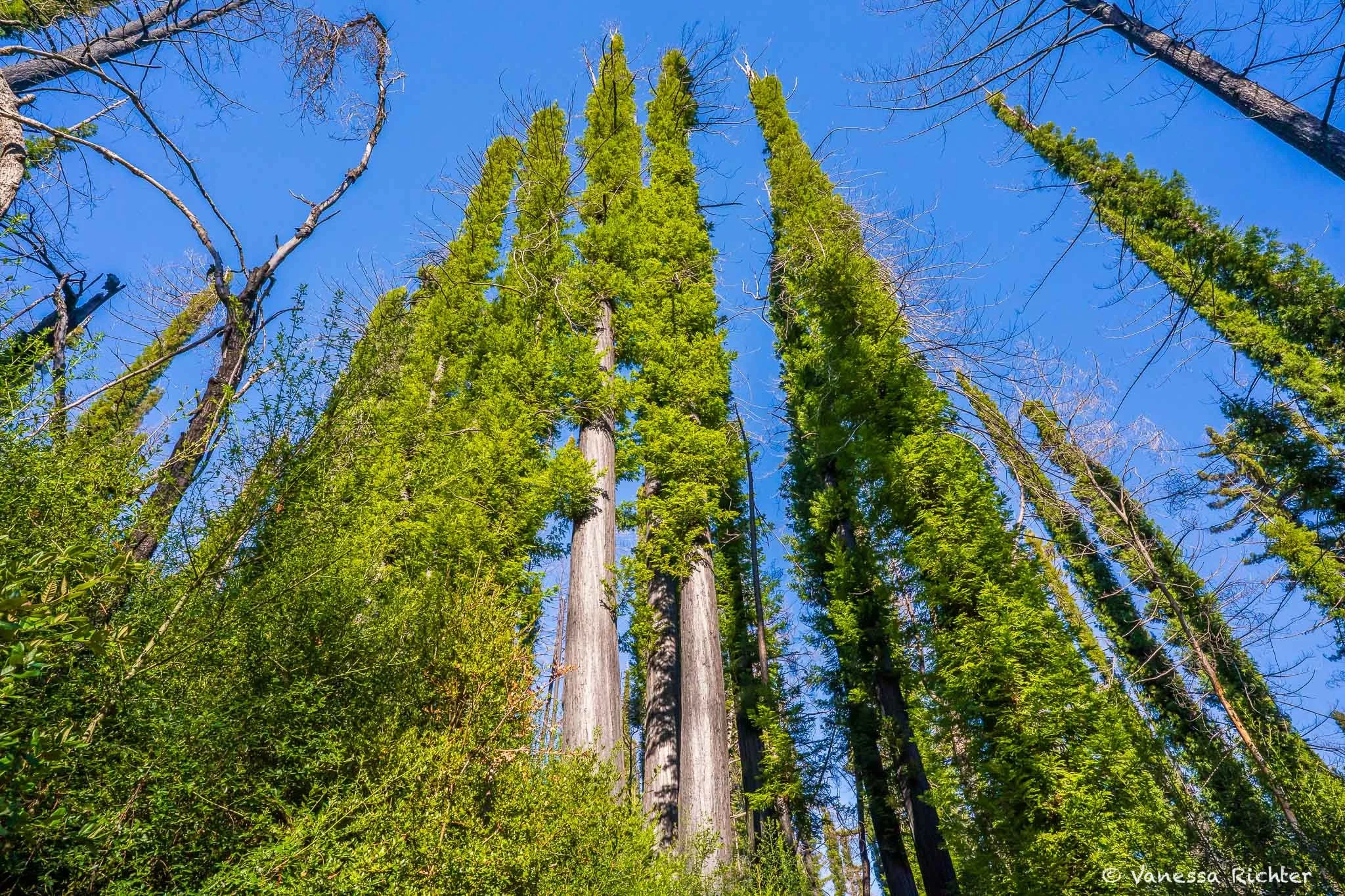
At the edge of the forest, I stood in silence, my gaze fixed on a horizon I could not see, hidden by the dark stalks reaching into the sky. I squinted and looked closer. The spindles coming up were dark, coal-dark, but there was something else that did not fit the picture. As I took a deep breath, I imagined I could still smell the fire, the death that had raged through them six years ago.
As my gaze went up the charred trunks, it suddenly hit color: bright green dressed the trees’ burnt skin. The scent of revival, of hope emerged alongside it.
When I first visited Big Basin Redwoods State Park after the fire, I was prepared for pure devastation. Prepared for burnt trunks of a once flourishing ecosystem that was now dead. And, it is true that the marks of the devastating fire are clear: Many trails were and are still closed. There's barely a tree without at least a scorch mark, and many stand entirely black instead of wearing the fibrous dark brown robes you'd expect on a coast redwood.
But that wasn’t all: I also saw a remarkable comeback of nature. New research shows: nature is coming back — at its own timeline and complexity.
In This Article
In 2020, at a time when the pandemic alone felt like a bad dream that we just couldn’t wake up from, California entered one of its worst wildfire seasons in history.
Ignited by rare summer lightning on August 16, 2020, and fueled by dry winds in the following weeks, fires engulfed 35,009 ha (86,509 acres) in the Santa Cruz Mountains, over 1,700 ha (4,200 acres) of it old-growth redwood forest. The fire’s technical name: CZU Lightning Complex Fire. It impacted 97% of Big Basin Redwoods State Park, California’s oldest state park and home to the largest continuous stand of old-growth coast redwoods south of San Francisco. The fires would not stop burning for 38 days, raging through every part of the forest, from the shady forest floor to sunny, shrubby ridges to the crowns of ancient redwoods towering above it all, some of them alive for more than 2,000 years, standing since the days of the Roman Empire. When the worst was over, more than a month later, spot fires continued to flare up, and redwoods even smoldered into the following year.
A Hike Through The Burned Forest: Here’s What I Saw
Now, six cycles of dry summers and wet winters later, I found myself in the middle of it all. The road up to the park was long and winding, steadily uphill, and I was relieved when I finally reached the parking lot. Surprised to see that I was the first and only person to arrive this morning, I dutifully filled out the form that the ranger advised me to leave in the car. When I had finished writing down which hike I planned on taking and when I expected to be back, I slid the paper onto the console and finally stepped out of the car. Quickly, I came to the realization that my sleepy brain had not considered altitude this morning when I had left the house. And so I found myself dressed in a T-shirt and thin fleece jacket to start out my hike in 40-degree (Fahrenheit) temperatures. It seemed like I could almost see my own breath; most of it probably just an illusion as smoke from a controlled burn lingered in the air. A small exhibition at the parking lot explained what had happened six years ago, and how the forest is recovering. After all, six years may not be so short on human timescales, but for trees making it to more than 2,000 years, if we let them, it is just the blink of an eye. I looked at all the animals and plants laid out on the colorful boards in front of me and could not help but wonder how many of them were able to escape the fire, and where the ones that got away went while the heat was raging through their home.
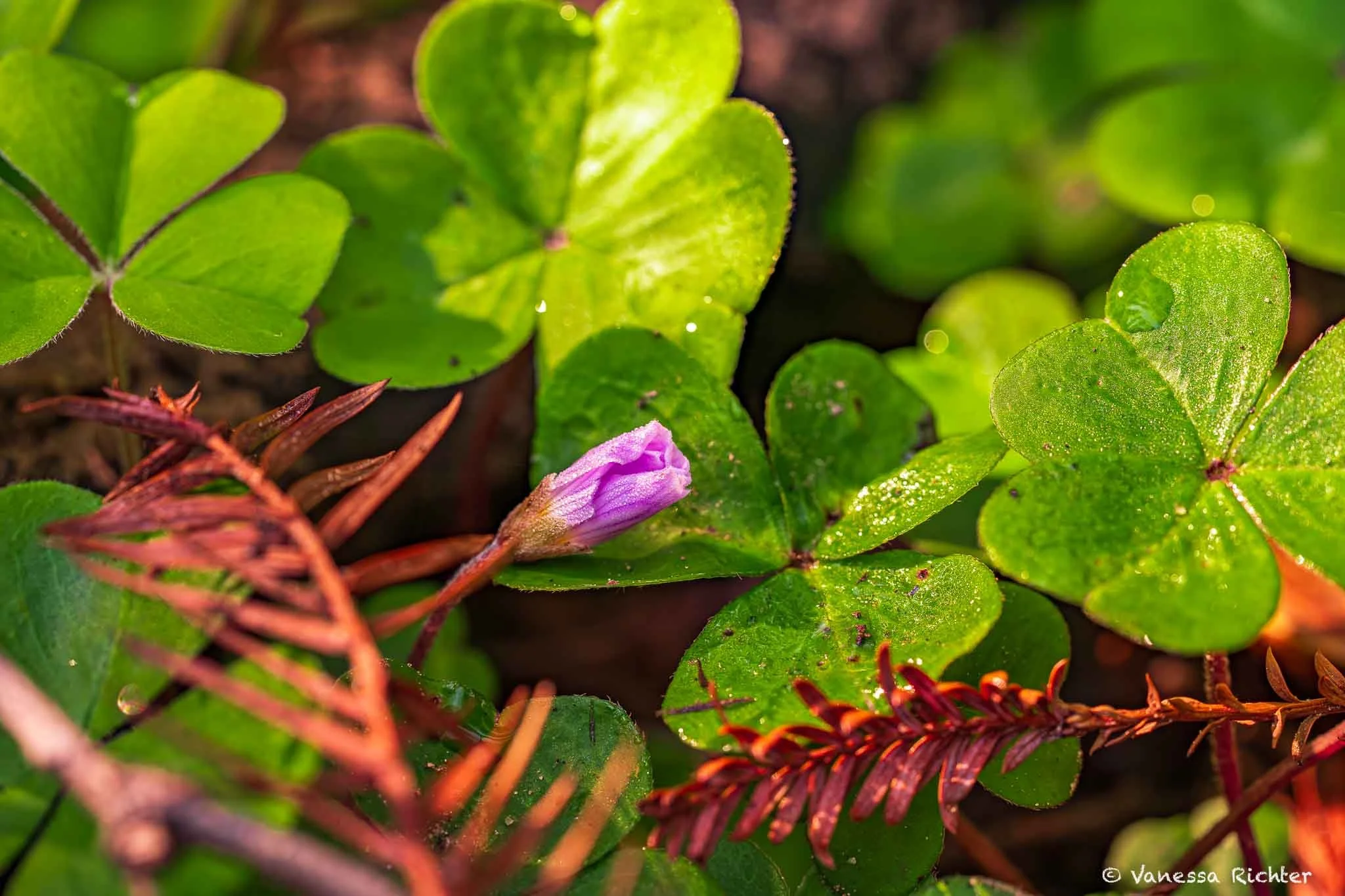
Still in thoughts, I disappeared into the forest. Thick brush, moss and young trees lined the sides of the trail from the beginning. In my thin fleece, I could feel the dampness slowly creep in. Tiny drops covered vegetation and forest floor everywhere I looked. The sounds were muted, with just a few birds chirping and rustling in the scrub. The sun was still low, but high enough to hit the parts of the forest like spotlights. Wherever the light reached, it let the tiny droplets sparkle like crystals. In the many shades of green and brown, a pop of color was creeping periodically through the wet. Banana slugs, not one or two but dozens of them, were in search of food and mates, crawling slowly yet steadily across the forest floor. I started to count them each time one met my eye, but quickly gave up. There were just too many. It was still winter and February had barely started, but the mild weather had already led to some redwood sorrel and violet blooms where the sun hit them just right. The dew collected on the pale pink sorrel flowers, shimmering like tiny diamonds on their delicate petals. One of them seemed like it was resting its head on a leaf, easing the weight of the heavy moisture.
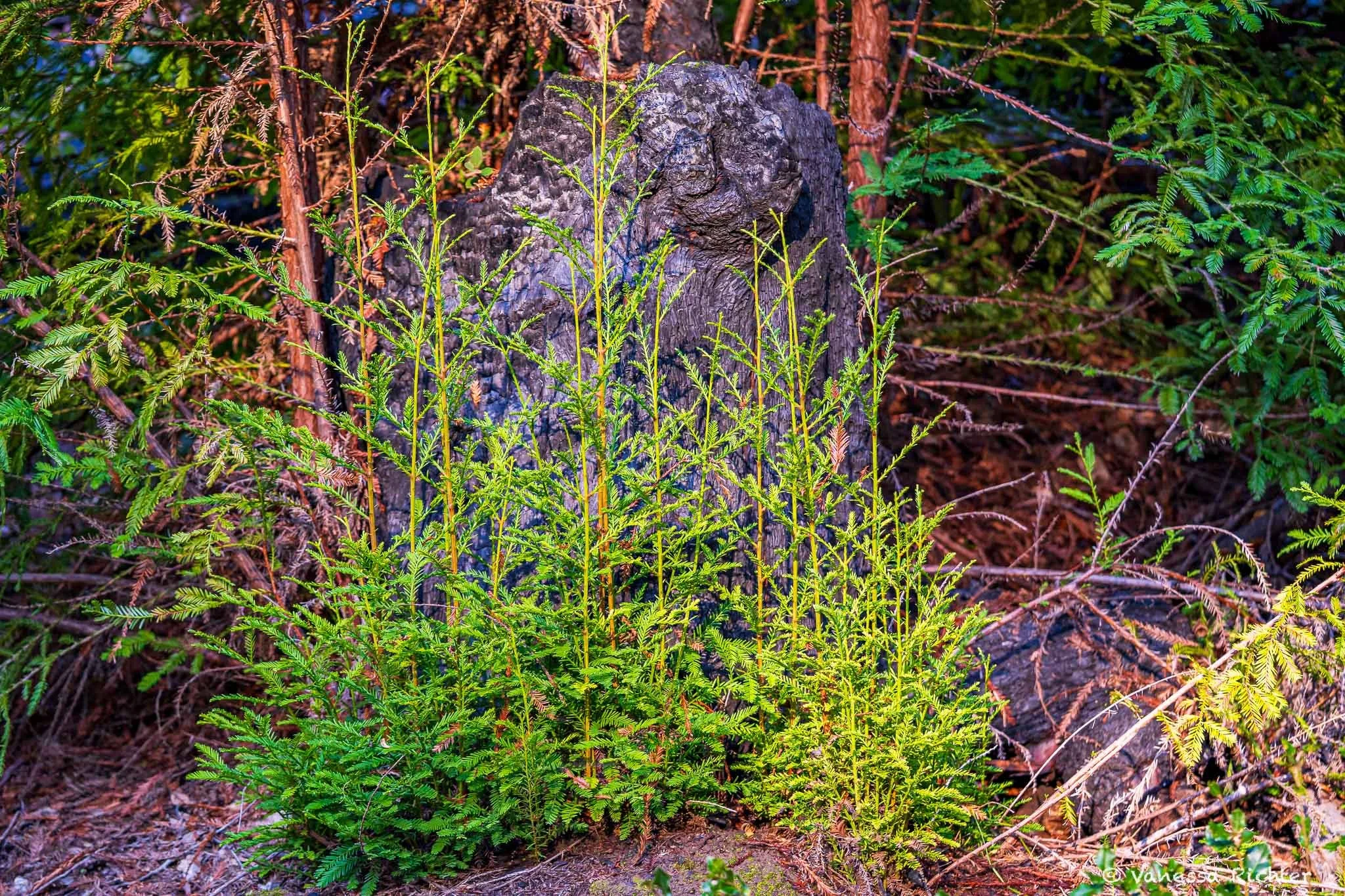
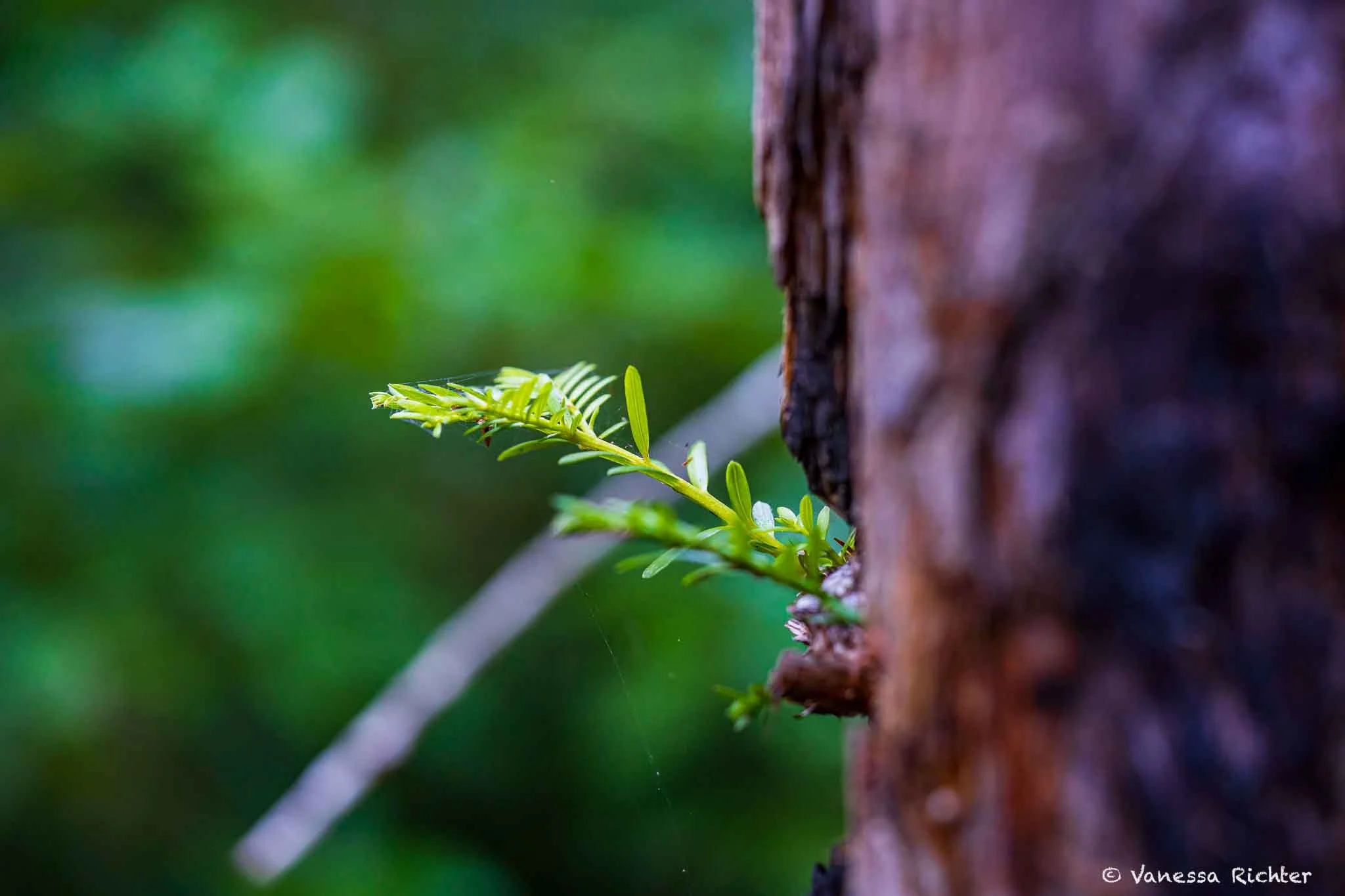
My eyes had been glued to the sparkles and the activity close to the forest floor. Now I let my gaze explore a bit further up. Here, the bright slimy yellow skin of the slugs was replaced by a furrowed black crust. More and more redwoods came into view, and each trunk that seemed older than just a few years was charred deep black with no part of its bark spared. At the same time, they all appeared to be dressed in dense greenery. At their bases, seedlings had popped up, surrounding the mature tree in circles that have earned them the charming name ‘fairy rings’. As I looked further up the tree, I could see bright new growth pushing through the bark and branches as well. All of it looked surreal, creating conflicting emotions: the ash-gray bark seemed to scream the tree is gone, but all the fresh green around it whispered new life.
And even beyond all the new growth, there were beginnings to be found in what appeared to be gone: in a hollowed tree trunk, a sparkle of bubbles lit up in the sun. Big saturated drops had clustered together, each of them looking like they might burst any second, releasing the fresh water they protected inside them. I looked closer and found the big and tiny bubbles clinging to a cobweb, every inch of the threads covered in sparkling droplets.
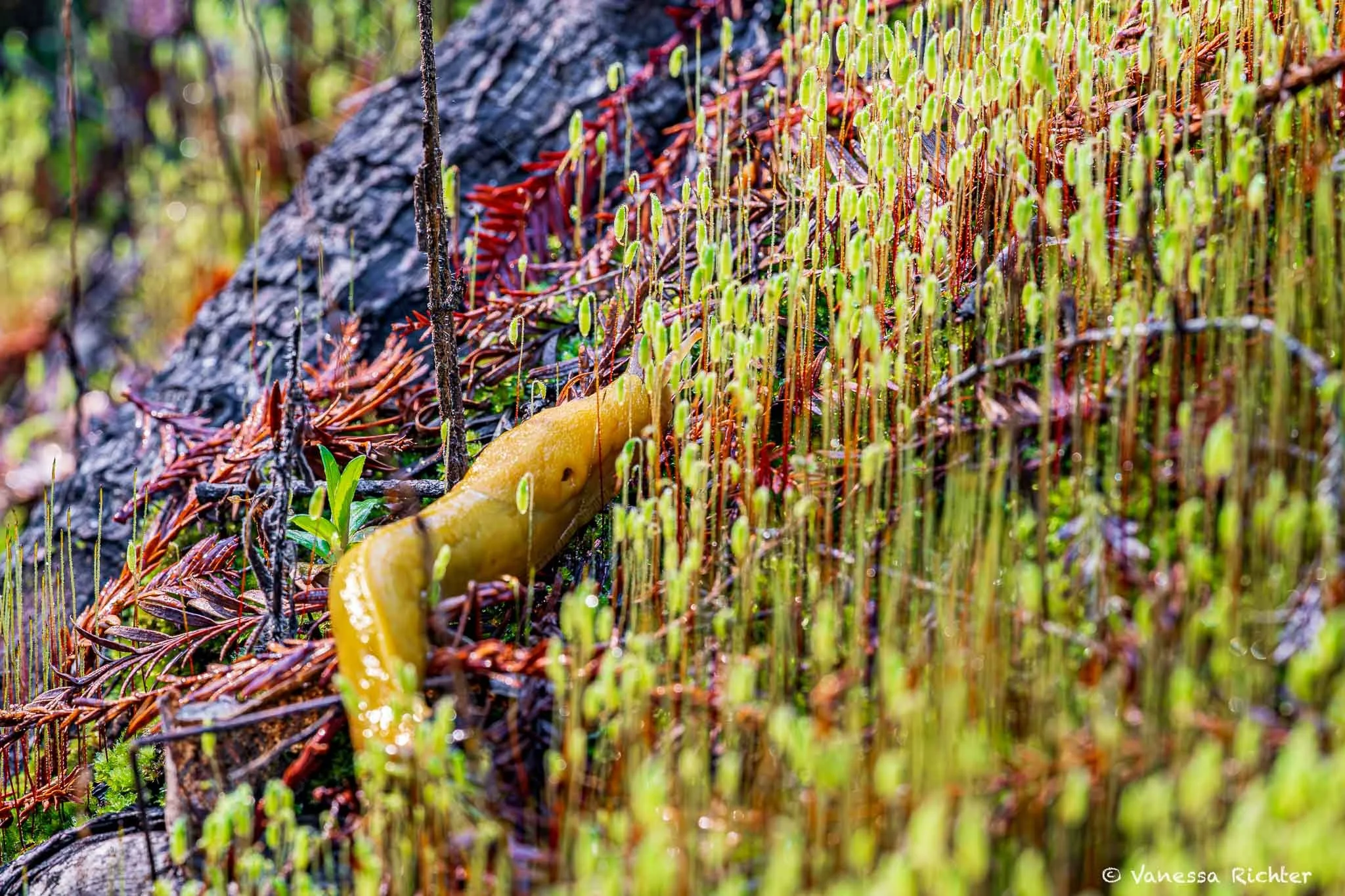
A banana slug is making its way across the damp forest floor.
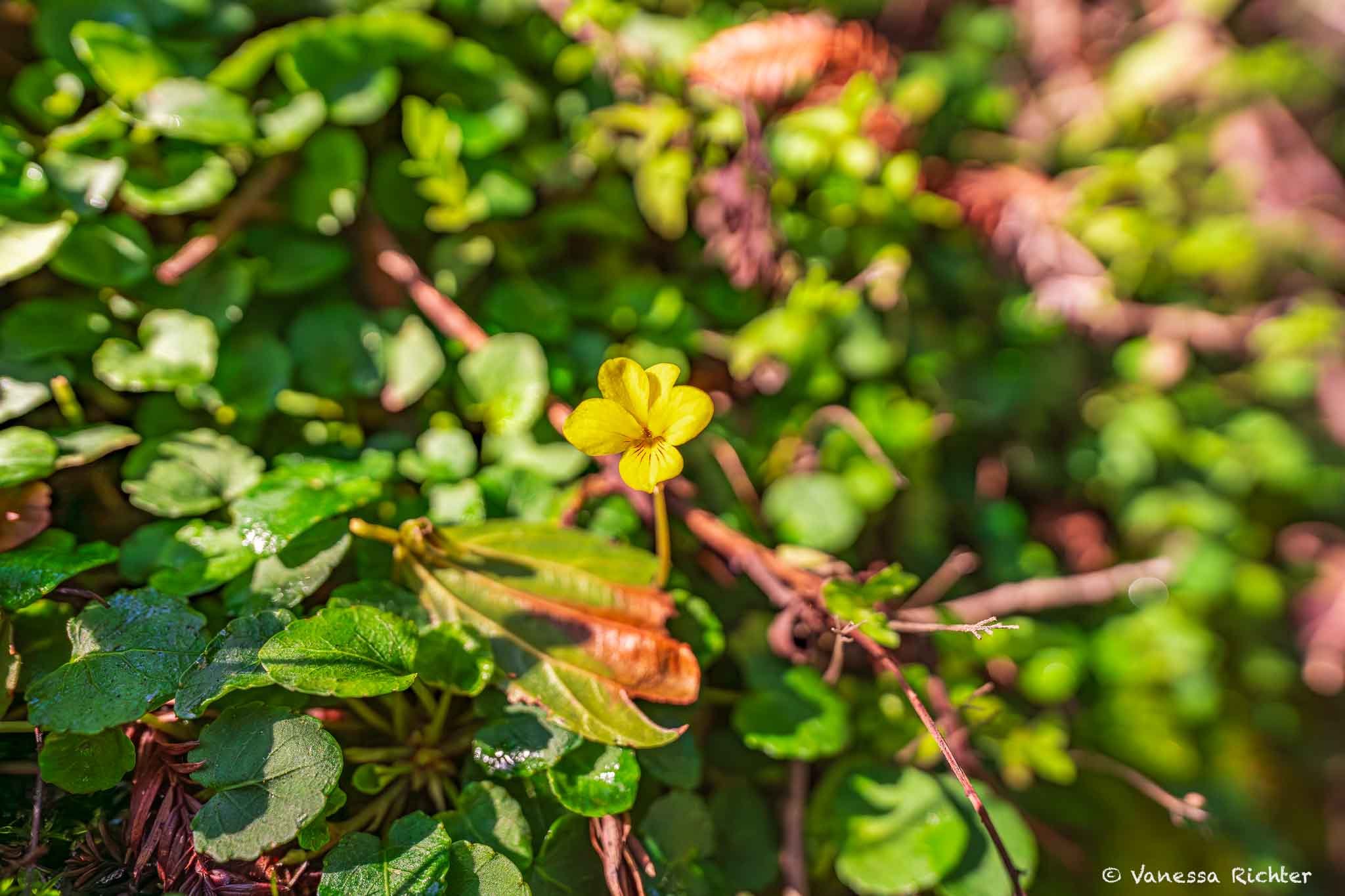
A redwood violet, already blooming on the shady forest floor in February.
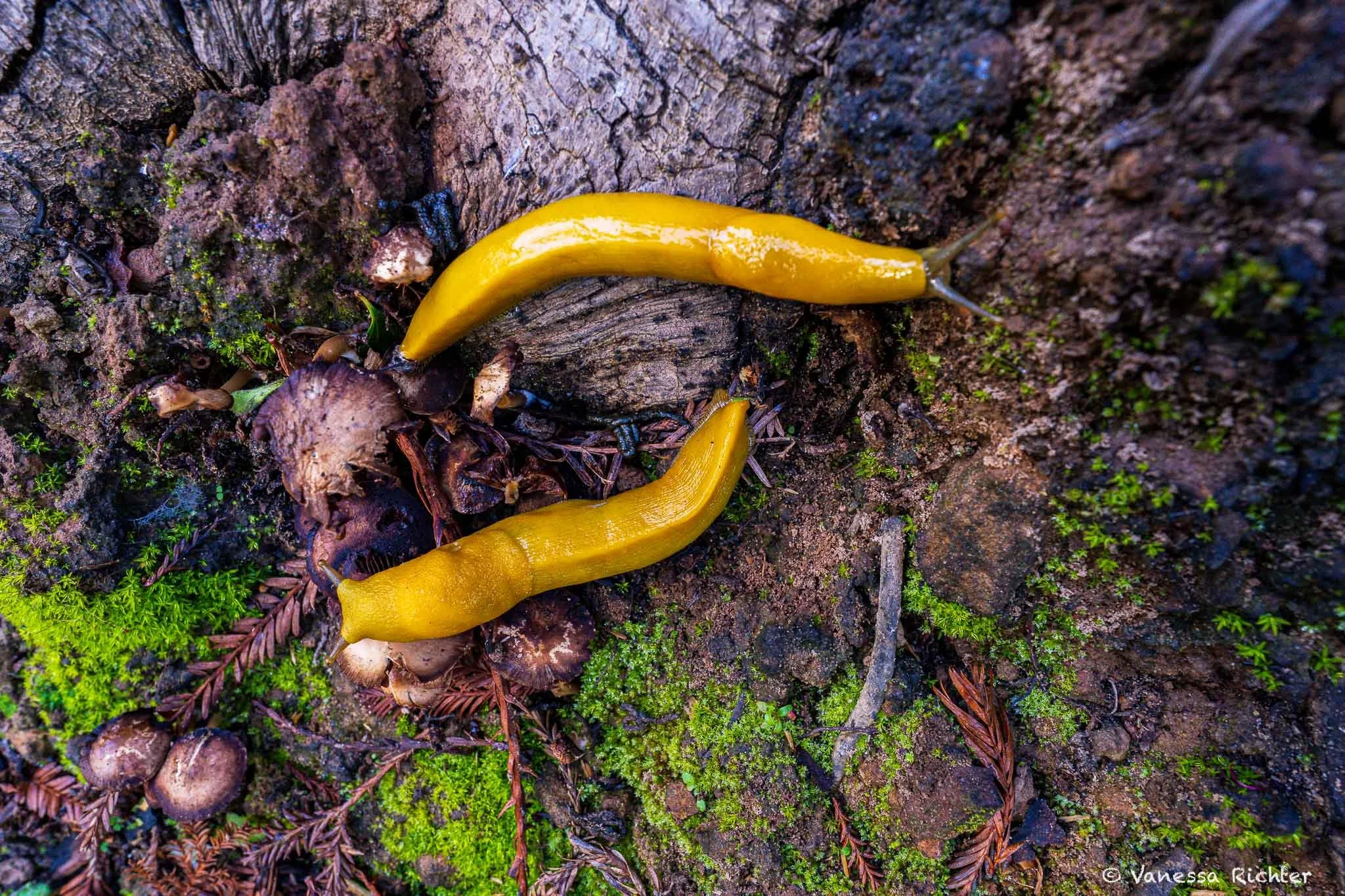
Banana slugs thrive in moisture, and on this damp morning they were everywhere.
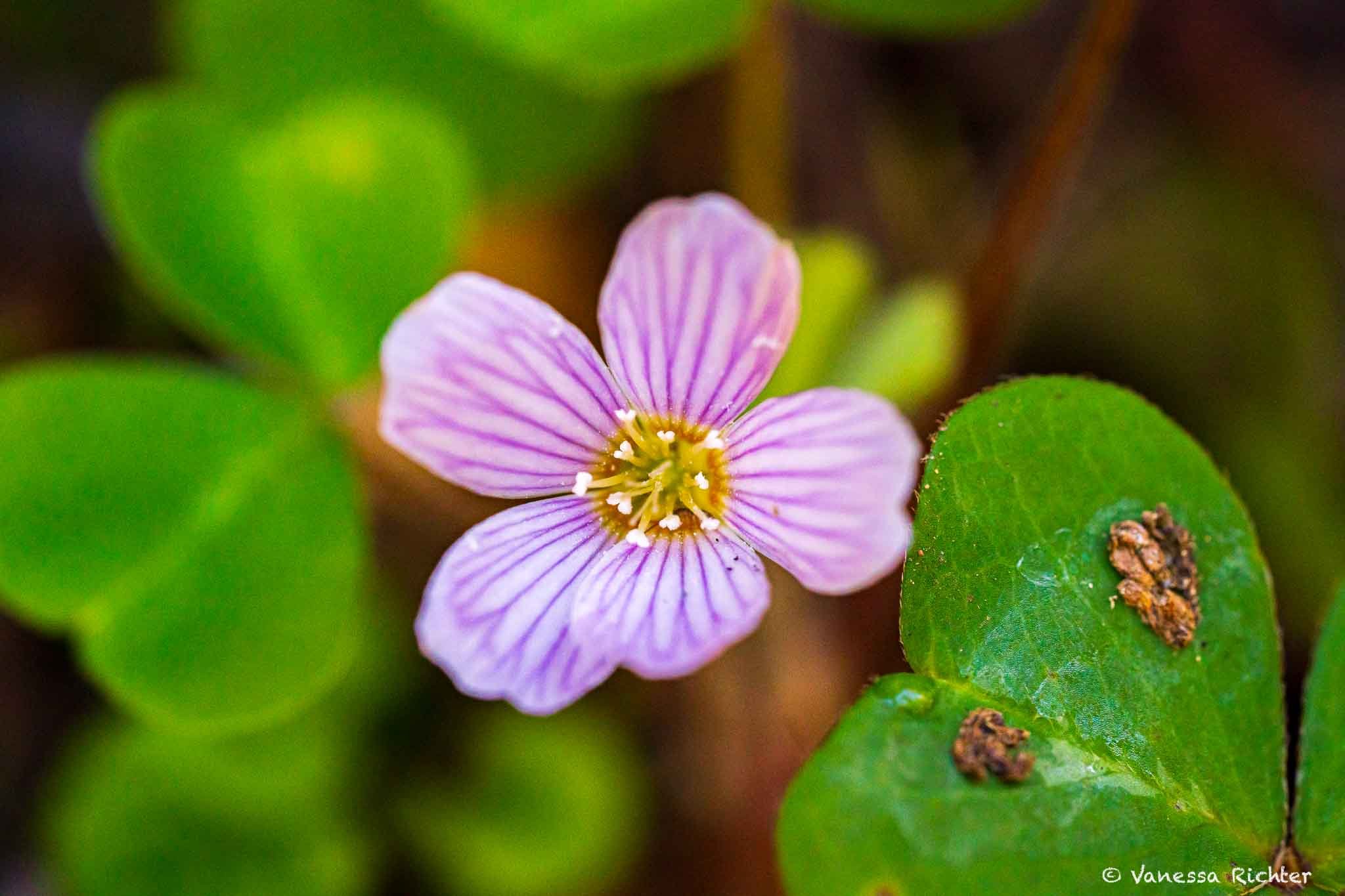
A redwood sorrel flower, blooming on the forest floor.
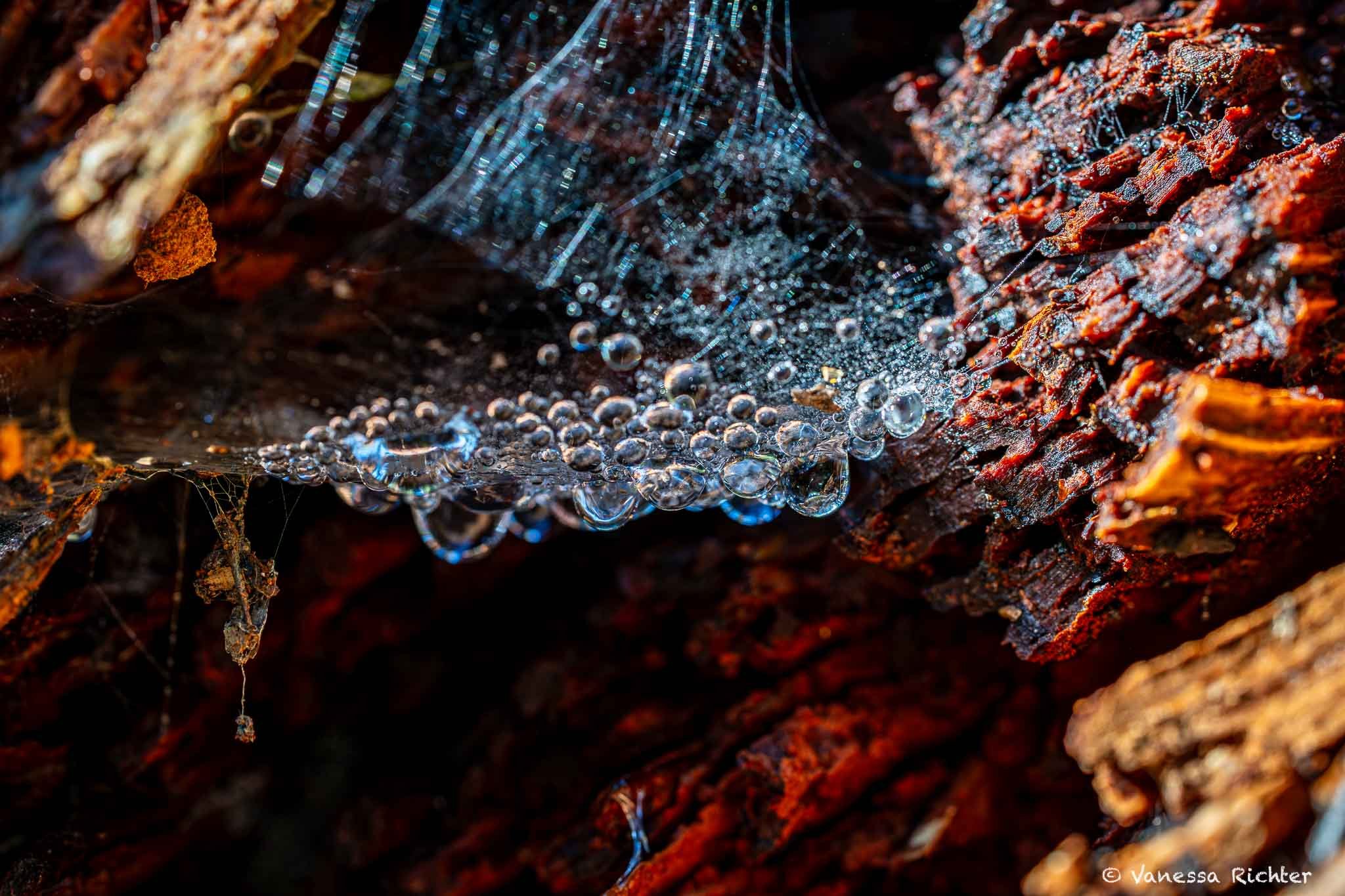
As I finished the climb up the mountain, I left the protection that the forest — even with the thinner canopy — has offered me. At the top, the sun was shining mercilessly on my head, heating my body up even more after gaining a fair amount of elevation. Even in February, the California sun sits high up in the sky, sending its warm rays like arrows down onto everything living under it. The damp conditions on the lower part of the trail felt like a distant world away now. Most of the tall trees up here had not made it through the fire as the few standing dead snags bore testament to. Bone-dry, sandy soil stretched out beneath my feet. On the sides of the trail, thick scrub and a few young trees grew in saturated colors at this time of year. All these low-lying shrubs could not have made it through the fire, which left only one conclusion: all of these plants had come back since. Manzanitas had popped up as far as the eye could see, many already surprisingly mature. Pacific madrone had resprouted. Knobcone pine seedlings were already taller than me, and as I started slowly descending again blue blossom was spreading everywhere. From the high ridges, the trail led eventually back into the forest, immersing me once again in the redwoods and sheltering me from the relentless midday sun. By the time I reached my car, I had not only a camera full of banana slugs, new redwood growth and flowers, but also a heart full of hope that nature can bounce back on its own even in the harshest conditions of the Anthropocene.
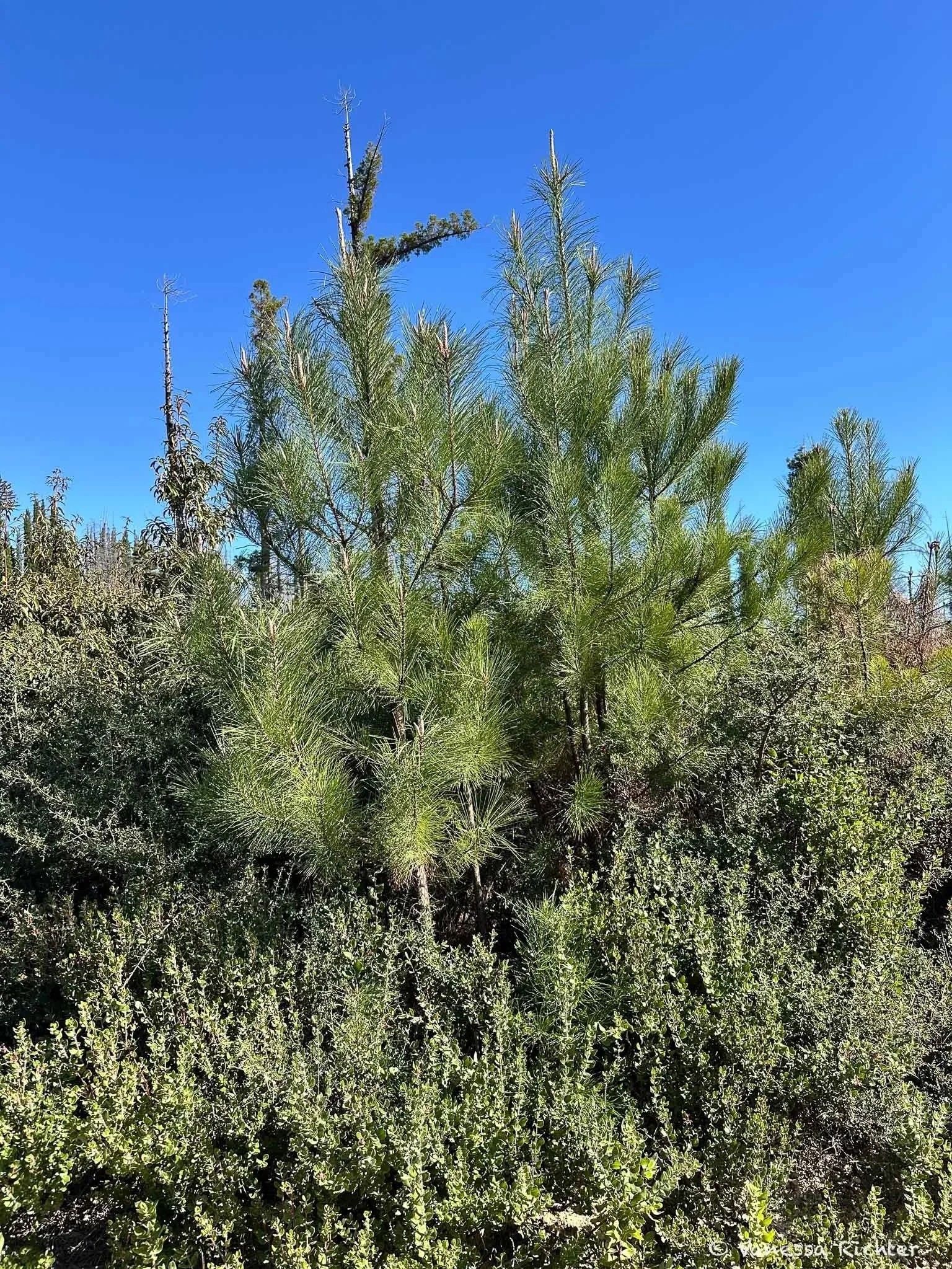
These pines were already taller than me, grown from seed to this height on a sunny ridge in just six years.
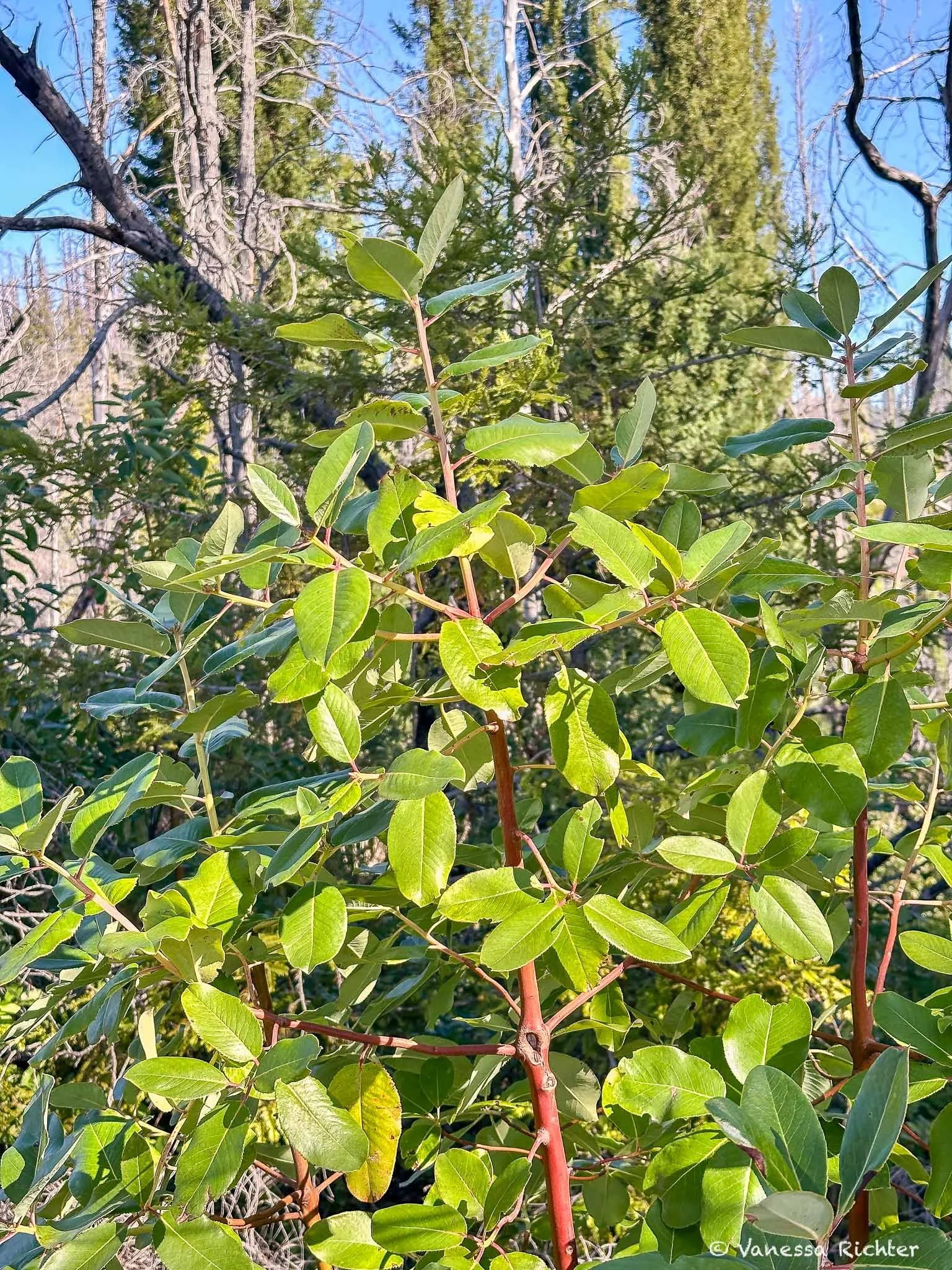
A young Pacific madrone showed off its red stems and healthy, light green leaves.
Fire is an essential part of California’s forests, home to species like the iconic coast redwood, manzanitas, tanoaks, and blue blossom.
Redwoods Are the Masters of Survival
Few living things could endure a fire that rages for weeks. The coast redwood has evolved to be one of them. Its bark is thick and insulating, shielding the living tissue inside from the worst of the heat. It can also reproduce through basal sprouting when stressed, often producing so-called fairy rings that surround the ash-gray base of a mature tree after fire. These baby redwoods are in fact not offspring in the usual sense. Exposed to the severe stress of a fire, the redwood saves its own genetic heritage by cloning itself. And it happens not only at the base but from branches and other parts of the tree, too.
Other Plants Sacrifice Themselves, and Fire Lets Them Reproduce
In an ecosystem shaped by fire for millions of years, coast redwoods are not the only species here to have evolved their own adaptations. While a coast redwood can survive the fire, most other fire-adapted plants will not survive as individuals, but their adaptations let their offspring germinate vigorously.
A great example is blue blossom. Its seeds wear a shell so tough that only intense heat can crack it open. They can wait in the soil for decades, dormant, until a fire finally wakes them. As a nitrogen-fixing species, blue blossom draws nitrogen from the air and helps prepare the soil for plants after disturbance.
And then there is the knobcone pine, which, like many other California pines, isn't equipped with thick bark like the redwood or other conifers. Rather than trying to survive the fire, it is typically killed by it. Its cones are sealed shut until heat opens them. After a fire, all those cones that had been waiting for their moment release their seeds. That's why knobcone pines in a forest are often the same age: they germinate, grow, and die at almost exactly the same time. Both their life and death are determined by fire.
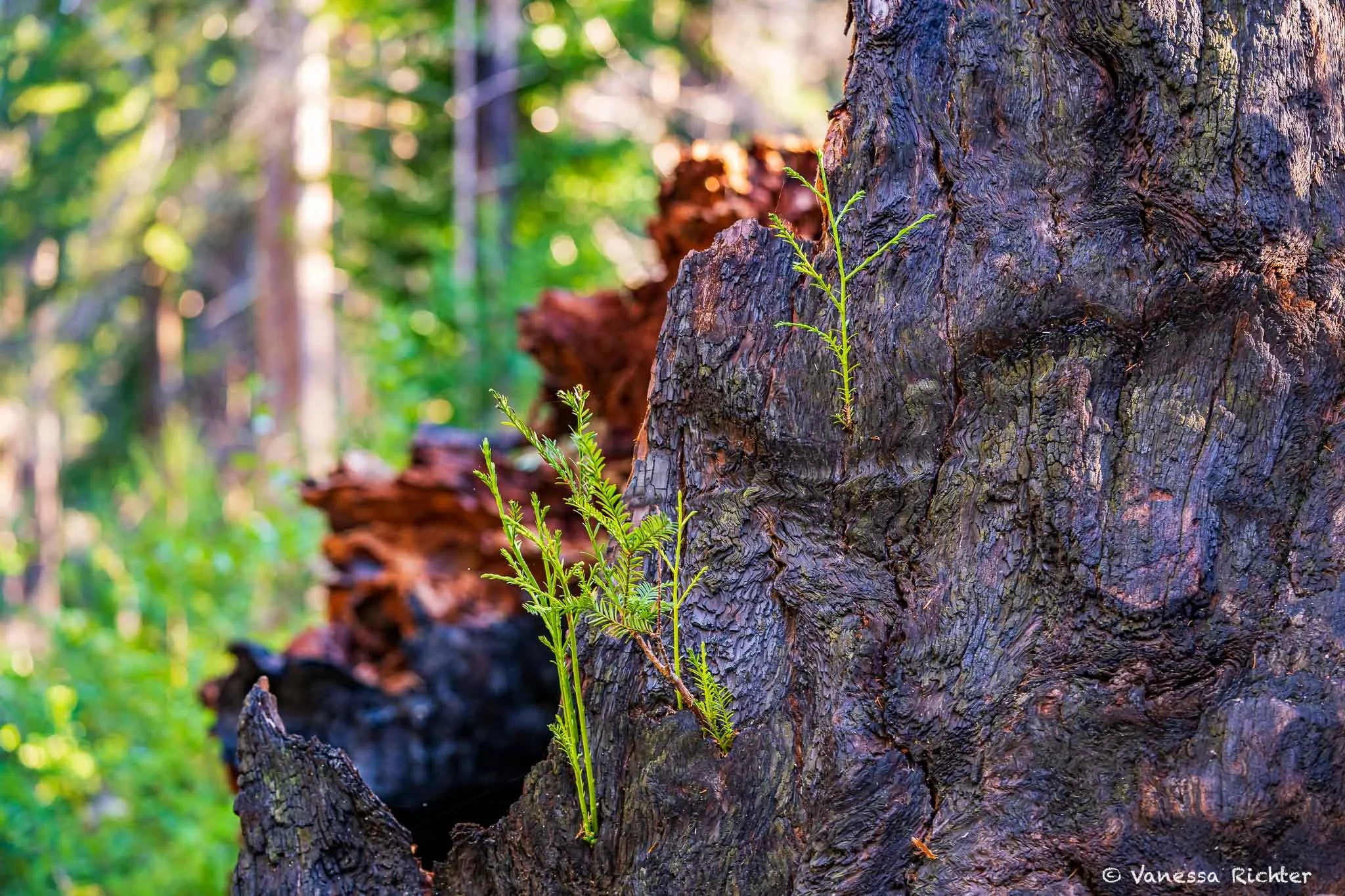
The hollow, burnt remains of this redwood make it look gone for good, but fresh growth is pushing out of the black crust.
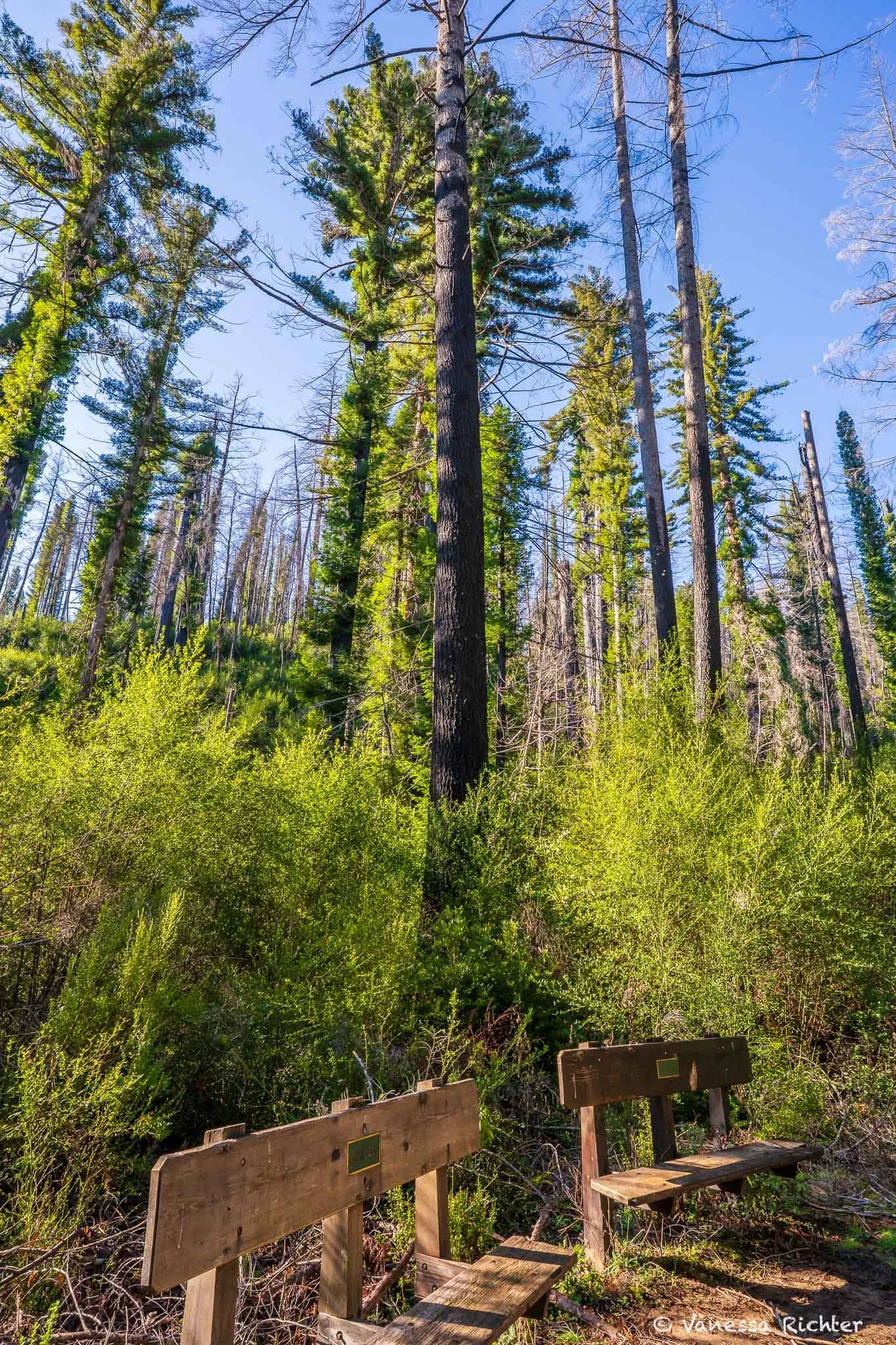
Black trunks ringed by new growth at their bases, with greenery draping the branches from the bottom to the very tops.
A fairy ring grows around the base of a charred redwood trunk.
Under the Scientific Lens: Why We Need to Stop Thinking in Human Timescales
With climate change increasing the frequency and intensity of weather extremes, wildfires burn hotter, longer, and more frequently than ever before. New research at Big Basin Redwoods State Park offers insights into what happens in the aftermath of a redwood forest burning, in parts, at high severity.
How much has been lost? What is coming back? And how is the forest changing?
These may sound like simple questions, yet the answers are complex. And they teach us something humans are not inherently good at: patience.
One Plant’s Loss Is Another Plant’s Gain
A 2025 study in the journal Fire revealed that much of what I was seeing on my hike hadn't been there just a year after the fire. Mojgan Mahdizadeh and Will Russell tracked the forest plot by plot, and what they found when they returned three years later was striking.
In that time, the scrub cover had increased dramatically. And the increase was not just more of a few plant species that they had already noted in that prior survey. Instead, a variety of species were competing their way back into the ecosystem. In other words, biodiversity was on the rise.
Many species that appeared lost had in fact just needed more time for their comeback. Blue blossom (Ceanothus thyrsiflorus) is a good example of this: in the study’s plots, there was no trace of it in that first year. But the species was not actually gone. Its seeds had been sitting in the soil, sometimes for years, waiting. Blue blossom seeds need intense heat to crack their tough coats and germinate, exactly what a fire provides. And once they sprouted, the fire had already cleared the way: with the trees and canopy gone, sunlight reached and warmed the soil, giving the seedlings room to thrive. Four years in, blue blossom had gone from absent to the most prevalent species in the scrub layer, doing especially well in high-severity areas.
That picture changed when looking at sites that had experienced a less severe fire intensity. Here, young trees were favored and able to establish their seedlings. The low-to-moderate burn severity areas offered more shelter and cooler soil due to a more intact canopy, and less competition with shrubs like Ceanothus. In fact, in areas where the fire had raged at high intensity, and which now face the harshest conditions on the ground, tanoaks (Notholithocarpus densiflorus) had not re-established themselves in the four years after the fire. Also, redwoods (Sequoia sempervirens) and Douglas-firs (Pseudotsuga menziesii) had spread more patchily and sparsely than in areas where the fire burned at lower severity.
Why So Many Blue Flowers?
Often, a single species being too dominant means trouble for the ecosystem. Typically, these issues are caused by non-native plants being brought into a habitat they did not evolve in, but do exceptionally well like ice plant (Carpobrotus acinaciformis and C. edulis) — the one you see so often along the highways and coastal areas in California with pink or yellow blooms at certain times of year — brought to the state from coastal South Africa where it grows in similar conditions. Because they do so well, they can outcompete the native plant life that has not evolved to coexist with them. The consequence? These ‘thriving’ non-native plants often become invasive, taking over vast stretches of land if left uncontrolled. In doing so, they choke out the native biodiversity that local pollinators and other species rely on while offering little to no benefit to wildlife overall. Large dead spaces covered in deceptive greenery.
With blue blossom starting to take up a large share of the shrub cover, it is indeed a very different story. Ceanothus thyrsiflorus is a California native; native not only to the state but to this particular area, so other plants here have evolved to coexist with it. In fact, blue blossom, over time, will allow more plants to grow. It is a pioneer and nitrogen-fixing species, preparing the soil after disturbance for other plants. Nitrogen fixation makes more nutrients available for more demanding plants like trees, paving the way for a forest to succeed the scrub.
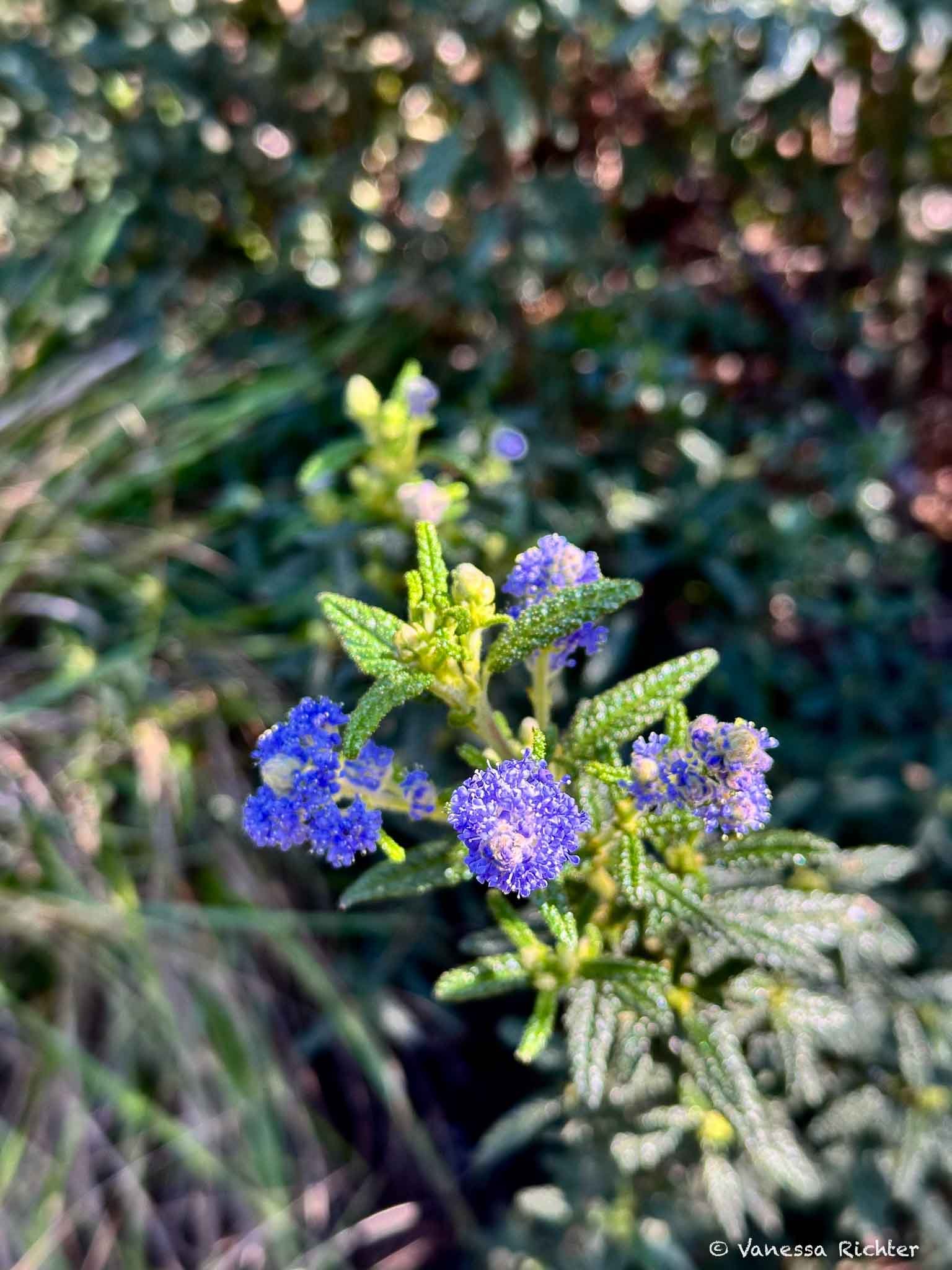
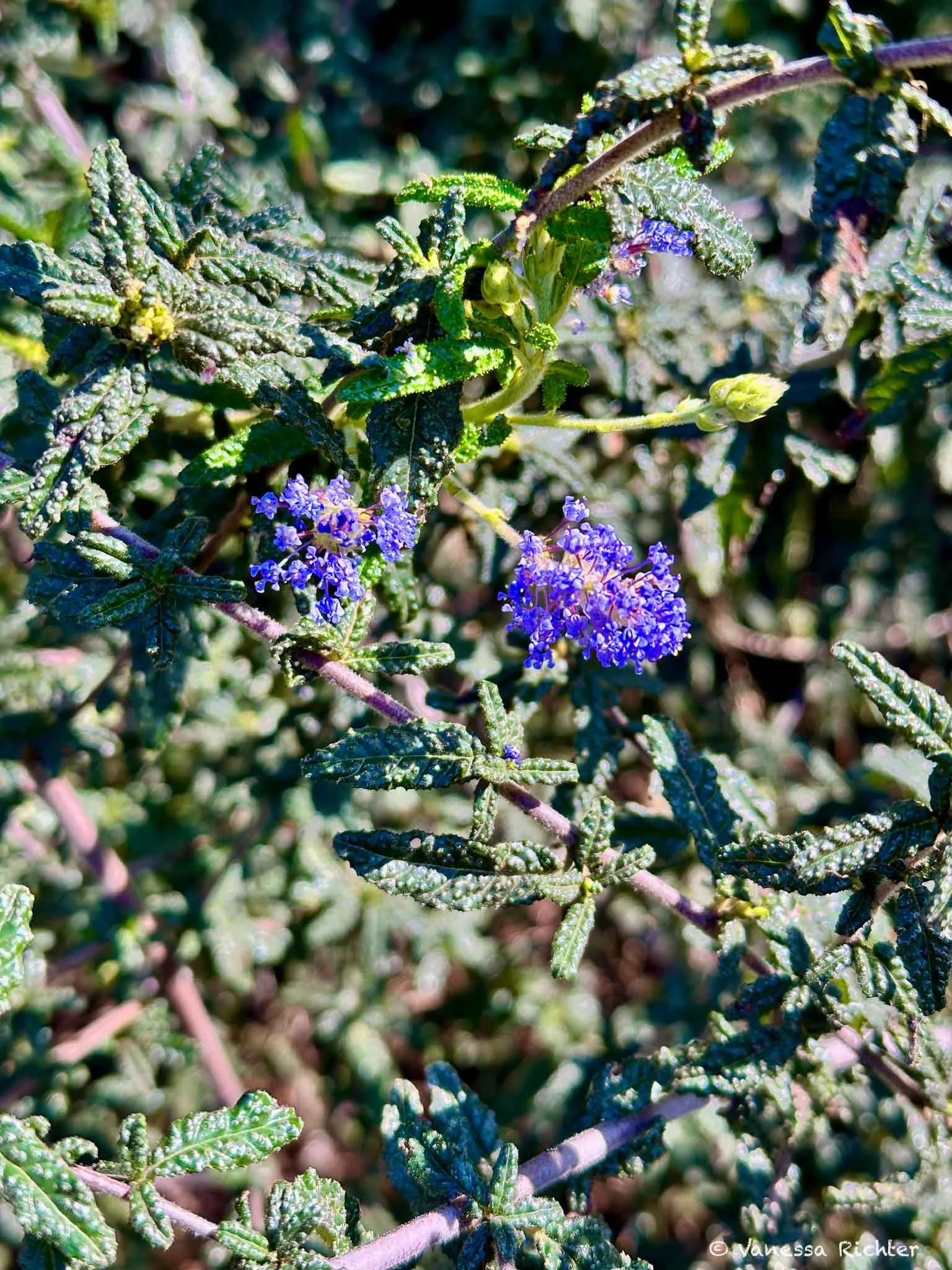
At first, Ceanothus thyrsiflorus (blue blossom) appeared absent after the fire. Years later, it dominates the scrub layer, showing off its flowers in winter and early spring.
The Future: Will Invasive Plants Take Over After All?
While the abundance of Ceanothus thyrsiflorus, a native and beneficial plant in the recovering ecosystem, is a reason for hope rather than concern, the research also shows that invasive species have made their way into Big Basin Redwoods State Park. The researchers found that non-native species made up over 5% of the herbaceous cover, with hedge parsley (Torilis arvensis) and Italian thistle (Carduus pycnocephalus) leading among them. The authors see this as cause for some concern, yet note that most of the non-natives discovered are shade-intolerant, so the more the forest recovers, the less likely they are to survive. Still, they advise continued monitoring to better understand their impact over time.
Recovery at Big Basin Redwoods State Park is far from done. But the forest is rebounding on its own timeline, not ours, shaped by species that can live over a thousand years.
In research, data collection and publication are often a significant time apart, so the data for the research reported above was collected back in 2024.
What has happened between 2024 and now? Which species are thriving? Here's what people have seen most recently along the park's trails.
Note that iNaturalist is a platform for people to record their nature observations. That means logged observations don't necessarily reflect the abundance of a plant, but rather which species people happen to notice along a hike. Species that stand out — a showy flower, an unusual look — may be logged more often than an inconspicuous one. Still, it gives a sense of what catches the eye.
How To Visit The Park In 2026
Which Trails Are Open?
Parts of the park remain closed as recovery continues, but plenty has reopened, with trails ranging from short and easy to long and strenuous. Below are some of the most popular options.
Redwood Loop Trail
A short, easy walk past the park's oldest and tallest giants, the Mother and Father of the Forest. The perfect introduction.
View on AllTrails →Creeping Forest Trail
A quiet, short path winding through redwoods.
View on AllTrails →Sequoia Trail
Old-growth redwoods leading to Sempervirens Falls and the sloping sandstone slab known as Slippery Rock.
View on AllTrails →Dool Trail, Johansen Road & Gazos Creek Road Loop
A full-day backcountry loop through old-growth, recovering forest with expansive views along the way. Starting early is recommended.
View on AllTrails →My Hike Pick
Big Basin Redwoods State Park · Santa Cruz Mountains · California
Skyline to the Sea & Meteor Trail Loop
View on AllTrails →Scan for map & details
📏
4.8 mi
7.7 km
Distance
⛰
902 ft
275 m
Elevation
🔄
Loop
Route
This is the hike I chose. This trail offers a great deal of diversity. You'll start the hike in the shaded forest, passing small creeks and a moist understory in which species like banana slugs, redwood sorrel, and violets thrive. A bit into the hike, you'll come across a redwood grove where all trunks are charred, but there is new growth everywhere on these trees, plus new seedlings pushing up. As you make your way up the trail, you'll eventually enter the sunny summit with lots of shrubs like manzanitas, young pines, Pacific madrone, and blue blossom, until you make your way back down into the forest again. It's truly a journey through many different microclimates, and with them, a variety of habitats.
Trail access changes as recovery continues, and you may encounter downed trees. Check conditions before heading out.
Know Before You Go
- •Limited first-come, first-served parking is available; parking reservations are not required but recommended; weekends and holidays are busiest. You can reserve a parking space here.
- •Chemical toilets and handwash stations are available at the parking lot.
- •There are no potable water stations, so make sure to bring your own.
- •Currently, dogs are allowed on leash in the parking lot area and for two miles along the North Escape Road. Dogs are not allowed on trails or unpaved roads.
Conditions as of June 2026; check the official site before you go.
How This Article Came Together
This article combines recent research findings, iNaturalist citizen-science data, and my own observations and original photography. The research it centers on is by Mojgan Mahdizadeh and Will Russell (2025), published in the journal Fire (“Post-Fire Succession in an Old-Growth Coast Redwood (Sequoia sempervirens) Forest,” DOI: 10.3390/fire8080322). iNaturalist data for Big Basin Redwoods State Park was extracted for the period from June 2024 to June 2026, using only research-grade observations for higher accuracy.
All conceptualizing, interpretation, writing, observations, and photography in this article are my own.
Claude (by Anthropic) was used in two ways: for a basic spelling and grammar check (corrections were applied manually by me); and as a coding assistant to write the code that processed the iNaturalist data and built the infographics visualizing it.